
Fabory Calls on Manufacturers to Rethink Inventory Management with RFID
For years, manufacturers have focused their digital transformation efforts on the obvious areas: robotics, automation, AI-driven analytics, and large-scale ERP systems. Yet one of the most persistent causes of production inefficiency has remained largely untouched, the management of low-cost, high-dependency components like nuts, bolts, washers, and other C-parts.
Now, as European industry faces mounting pressure from rising operational costs, labour shortages, and tighter margins, companies are being forced to confront an uncomfortable reality: a single missing fastener can still bring an entire production line to a standstill.
According to Fabory, Europe’s specialist supplier of fasteners and industrial C-parts, manufacturers are increasingly discovering that the true cost of these components has little to do with the components themselves.
Instead, the hidden expense lies in the outdated processes surrounding them.
The invisible operational drain manufacturers rarely measure
Despite the rise of Industry 4.0, inventory management for small industrial components often remains stubbornly manual. Weekly stock walks, clipboard-based checks, emergency supplier calls, and reactive replenishment processes are still commonplace across factories throughout Europe.
Industry estimates suggest that as much as 80% of a product’s total cost of ownership can stem from procurement, administration, stock handling, logistics, and internal management processes rather than the price of the component itself.
“The fastener or C-part is rarely the expensive item on the balance sheet,” said Sander Langkamp. “The expensive item is everything that surrounds it.”
That includes procurement teams manually checking stock levels, urgent courier deliveries when bins unexpectedly run empty, and costly production stoppages caused by missing consumables. In an era where manufacturers are under pressure to increase uptime while reducing operational waste, those inefficiencies are becoming harder to justify.
RFID enters one of manufacturing’s last manual frontiers
Fabory believes the answer lies in applying automation to one of the factory floor’s least digitised processes.
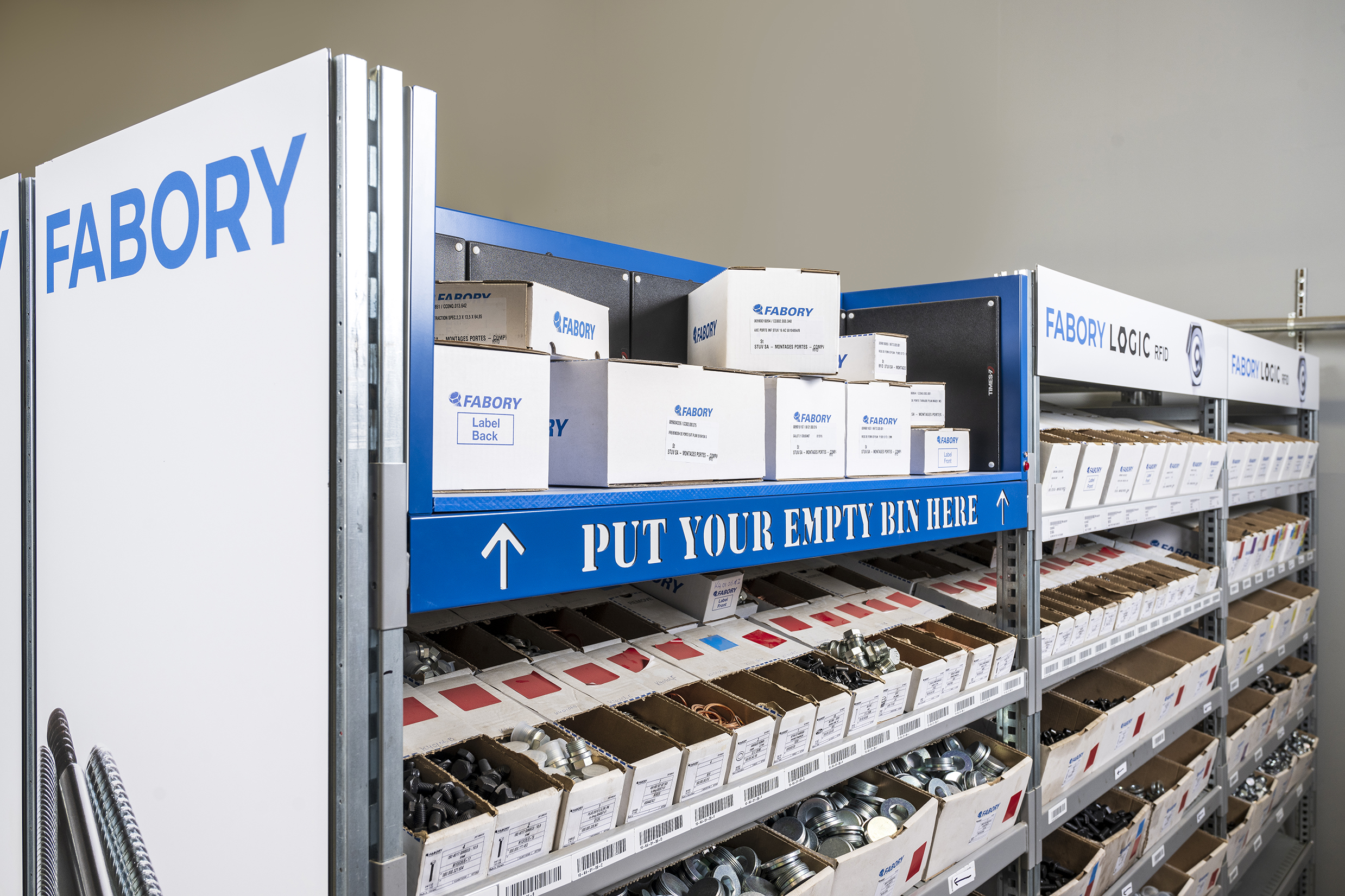
Its solution, Fabory Logic RFID, uses RFID-enabled shelves and dropboxes to automate inventory replenishment for fasteners and C-parts. When an employee empties a bin, it is placed onto a smart shelf or into a dropbox, where the system immediately detects the empty container, identifies the part, and triggers a replenishment order automatically.
The goal is not simply convenience, it is operational continuity.
By removing manual stock checks and guesswork from the replenishment cycle, manufacturers can reduce downtime risk while freeing procurement teams from repetitive administrative tasks. The system also feeds live consumption and inventory data into Fabory’s MyFabory platform, giving operations and procurement teams real-time visibility into stock movement, order status, and supplier performance.
From automotive to food production, the problem is universal
One of the notable aspects of the technology is that the challenge it addresses is not sector-specific.
Whether in automotive manufacturing, machine building, steel construction, or food production, the operational vulnerability is the same: production environments remain heavily dependent on low-cost components that are easy to overlook until they disappear.
“What we hear consistently from customers is that downtime caused by a missing C-part is one of the most frustrating problems in manufacturing because it is entirely preventable,” said Vojtech Kacerek.
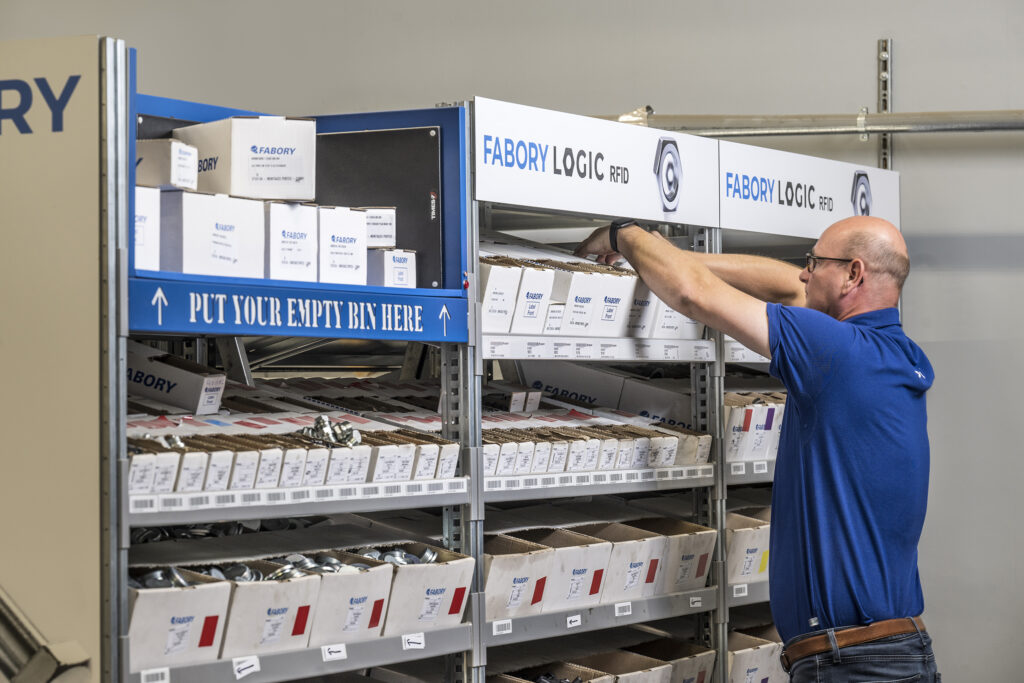
According to Fabory, manufacturers adopting RFID-led replenishment systems are consistently reporting four major operational benefits:
- Lower total cost of ownership through reduced administration and fewer emergency orders
- Reduced production downtime
- More accurate stock optimisation based on real consumption data
- Reduced workload for procurement and warehouse teams
One example comes from Dutch manufacturer Lan Handling, which previously relied on weekly manual stock inspections. Since adopting RFID-based replenishment, the company reports that downtime linked to missing components has effectively been eliminated, alongside delays caused by reactive ordering processes.
A wider shift in industrial procurement strategy
The rise of automated C-part management reflects a broader transformation taking place across industrial procurement. Manufacturers are increasingly consolidating suppliers, seeking greater resilience across supply chains, and investing in technologies that provide real-time operational visibility. In that context, areas once considered too minor to prioritise are now becoming strategic concerns.
Inventory management for fasteners and consumables may not attract the same attention as robotics or AI, but the operational consequences of neglecting it are becoming harder to ignore. Fabory argues that manufacturers who digitise these processes early will gain a competitive advantage not only in cost control, but also in uptime, workforce efficiency, and decision-making quality.
“Inventory management for fasteners and C-parts has historically been one of the last areas of the factory to be digitised,” Kacerek added. “The manufacturers who move first will pull ahead on cost, on uptime, and on the quality of decisions their teams are able to make.”
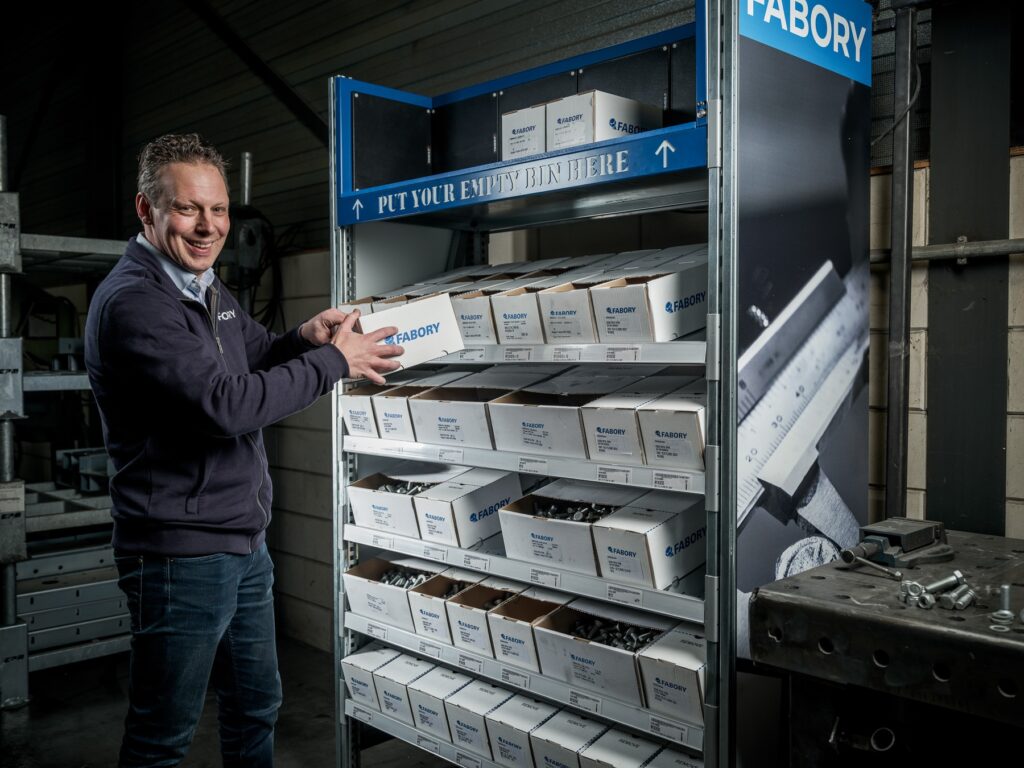
Fabory Logic RFID forms part of the company’s wider smart logistics portfolio, which also includes Optical Bin and Weight Scale technologies connected through the MyFabory Insights dashboard.
This article is based on a company press release and has been edited for editorial clarity.
For more information about Lubrinox fasteners or the Fabory brand, or to request an image, quote or interview with Fabory’s product experts, please contact Laura Tatton at ConsuLT PR & Marketing, laura.tatton@consultltd.co.uk or visit https://www.fabory.com/en_GB/group/fabory_logic/rfid