
MVPro Media – The Vision Podcast #24
Guest – Taimoor Nawab – CEO, Averian
Taimoor Nawab, CEO of Averian, joins Josh Eastburn to discuss a different way of thinking about automated inspection: training AI on what good looks like, rather than trying to capture every possible defect.
In this episode, Taimoor explains how Averian’s AI Validator is designed to reduce setup time, simplify deployment, and help manufacturers detect anomalies that may not have been seen before. The conversation covers defect detection, object detection limitations, deployment speed, manufacturing adoption, and where AI-based inspection is heading next.
On this page:
- Podcast player
- Guest information
- Useful links
- Episode chapters
- Episode transcript
Listen to the Episode:
About our Guest:
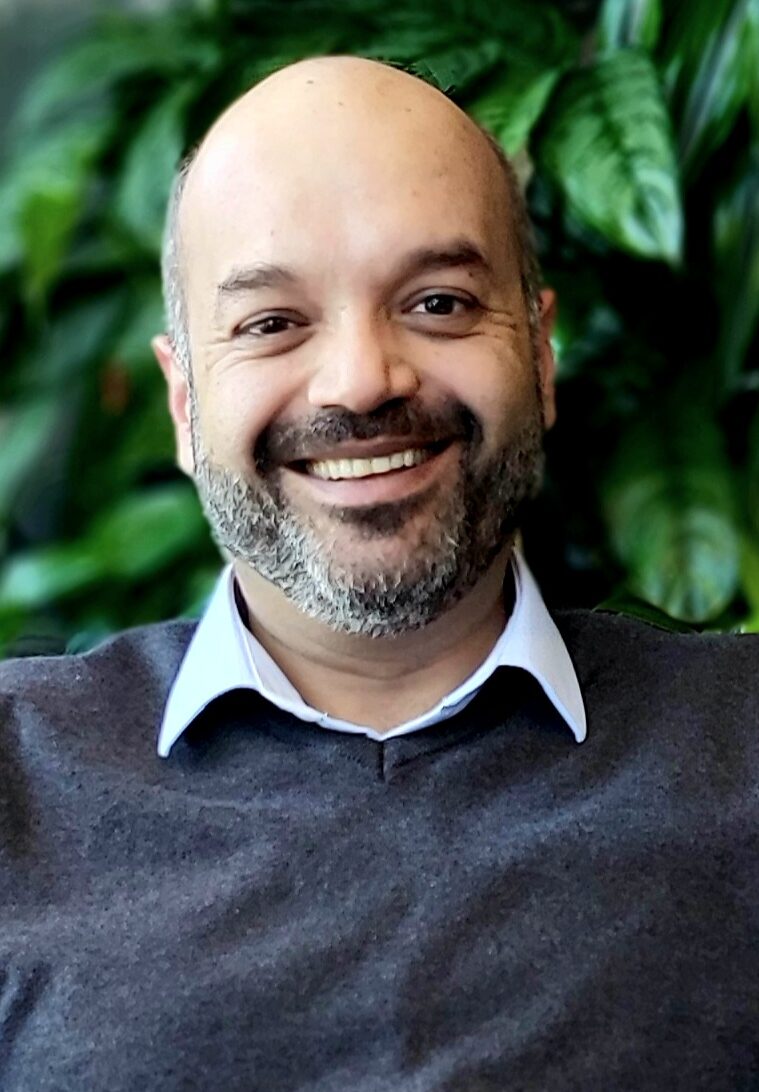
Taimoor Nawab is the CEO of Averian, where he leads the company’s work in AI-driven visual inspection and anomaly detection for industrial applications.
With a background spanning engineering, manufacturing operations, test development, and business leadership, Taimoor has spent much of his career focused on quality inspection, automation, and production systems. His experience across the full product lifecycle has shaped a practical approach to how manufacturers can improve reliability, scalability, and defect detection using AI.
Useful Links:
Taimoor Nawab
LinkedIn: linkedin.com/in/taimoornawab/
Averian
Website: averian.io
LinkedIn: linkedin.com/company/11030971
X: x.com/AverianAI
Episode Chapters
Click onto the chapters to access the relevant sections of the transcript below
1. Why inspection systems still miss defects
Josh and Taimoor discuss the limitations of traditional defect detection and why manufacturers still struggle with unknown failure modes.
2. Training AI on what good looks like
Taimoor explains Averian’s anomaly detection approach and why training on acceptable product changes deployment speed and flexibility.
3. Reducing complexity in manufacturing inspection
The conversation explores setup time, GUI-based workflows, retraining, and how AI Validator is designed for faster adoption on the factory floor.
4. The future of AI-driven inspection
Taimoor shares where demand is growing, how the platform is evolving, and what’s next for AI inspection in manufacturing.
Episode Transcript
Taimoor Nawab – Averian
We kind of said, okay, let’s, let’s look at this a very different way. Why don’t we train these AI models so that they understand what good looks like? Just like a human. You hire someone new, you teach them how to do something correctly. You assume that they’re smart enough to know when they see something that’s not right. So that’s the approach we took.
Josh Eastburn – Host
Welcome to the MV Pro Podcast. Every time you make something, you have to inspect it. That’s not a new problem, but the tools manufacturers have relied on to solve that problem whether that’s human inspection or automated inspection, typically take a common approach. They’re trained based on what you know can go wrong. My guest today has built a product around a different promise entirely. What if you trained the system on what good looks like and let it figure out the rest? My guest is Taimoor Nawab, CEO of Averian. Taimoor spent years in engineering and business leadership across manufacturing, test development, and operations, where he learned that a high failure rate on a test isn’t always bad news. And that perspective shapes everything about how Averian approaches the inspection problem now. Averian is a Canadian software development company with teams across North America and Europe. The company was looking for a solution to automated quality inspection. The answer to that question became AI Validator, and that product has since become the center of gravity for the entire business. We get into how AI Validator works and why training on good product rather than known defects makes it much faster and easier to implement. Please enjoy my conversation with Taimoor Nawab.
Josh Eastburn – Host
You’ve worked across engineering, operations, manufacturing, leadership. I’m wondering, out of all of that experience, do you have a sort of like a favorite story or favorite experience project involving computer vision or defect detection that comes to mind?
Taimoor Nawab – Averian
Yeah, I don’t know if I have one favorite thing. I tell this to a lot of, a lot of people. I spent a good chunk of time in manufacturing doing test development. It was funny because the goal of tests is to catch defects. right? And it could be functional test or visual inspection. And I would always get this question on certain products. They’d be like, hey, the yield is really bad. Like, the tests keep failing. We gotta do something. And I’d always look back at them and I’d be like, oh, well, that’s good. That means the test is doing its job.
Josh Eastburn – Host
Yeah.
Taimoor Nawab – Averian
And then I’d get this long pause before they will, they’ll like kind of have this moment. They’ll be like, oh, right. All right. And anyway, so that, yeah, I find that very interesting cuz it’s a little counterintuitive. Right? It’s counterintuitive to kind of doing product development. Throughout my time, I think what I realized really quick is how important test is to any kind of technology development. And it doesn’t have to be anything physical. It could be just software solutions as well. I think having this experience, having done design, manufacturing, sales, I kind of got a very good idea of what the impact can be if you do not catch defects before product lands in customers’ laps. That’s a big problem. I think it resonates quite well. I still remember it. I mean, I still remember those conversations.
Josh Eastburn – Host
And so also, given that background, you step into the role of CEO, and I think at the time the company had a different name. How did you pronounce it?
Taimoor Nawab – Averian
What was it called? Arvizio. AR Vizio for augmented reality vision.
Josh Eastburn – Host
Yes. And so the company’s gone through a rebrand since then, but I’m wondering what do you feel like you brought to the role at that point? What did you see that others maybe didn’t see at the time that maybe even led to that change?
Taimoor Nawab – Averian
Yeah, so, you know, I can tell you what I saw when the leadership at Arvizio reached out to me. So I think I was in a little bit of a unique position because I kind of understood manufacturing. I kind of understood the entire product lifecycle. So I understood the value of the technology that was being built. Right? I think we all know that upskilling people in terms of their capability, being able to test faster, better, reduce cost. These are all things that resonated with me. So when I saw the technology, I could quickly see how it’s applicable. And then the other thing, which is probably even more important, is just the people, right? Super bright, very down to earth. Technologists that really cared about solving problems. Being an engineer myself, I think that kind of made me feel good that there’s a very strong team here. Yeah. It’s very easy to be the sales guy and not have any meat underneath that’s kind of backing the pitch. But in this case, it wasn’t a pitch. It was just, hey, here’s what we’ve done and here’s why we’ve done it. and now we really need somebody to come take us to the next step. And it was, it was just alignment from day one, I guess.
Josh Eastburn – Host
I think you said there was a big change obviously that, that came along with the rebrand to becoming Averian, a big injection of capital, new engineering staff.
Taimoor Nawab – Averian
Yeah.
Josh Eastburn – Host
So let’s tell me, can you, what’s kind of the big picture there of that change and sort of the direction that the company, the new trajectory that you started there?
Taimoor Nawab – Averian
Yeah, we had our augmented reality platform, which is really how do you guide people to do stuff in their visual field of view? We still have customers using it, but what ended up happening, Josh, was the customers would say, hey, that’s great, I can get Josh to do something and do it really well, but how do I check? How do I check that Josh actually did it correctly, right? And it was like, hey, this is a great roadmap feature for our platform. So we started working on our cognitive AI solution. Which we call AI Validator now. And it turned out that solution checked a lot of boxes for enterprises. They were like, hey, Averian, we love your augmented reality solution, but we really like your AI Validator solution. Can we just have that? And you know, from a business perspective, it was like, hey, the interest in that was just 5 times what we had. And so we didn’t want to limit ourselves to AR, augmented reality. visio. So we did a rebrand, and because of the traction we had in AI Validator and the request to customize it for different kind of scenarios, we needed horsepower, which is the horsepower in terms of headcount.
Taimoor Nawab – Averian
So that’s how that whole strategy and transformation came about. And now we’re Averian, a global company, people in Europe, people in North America, and the rest is our story, I guess, our history.
Josh Eastburn – Host
And so AI Validator jumps to become the top of your product portfolio. Uh, let’s talk about what problem that solves. You started off with a story about defect detection, and so I’m assuming that’s where we’re going.
Taimoor Nawab – Averian
Yeah. So, so the simple problem it’s solving is how do you inspect any asset, right? Any physical asset without having to go through this big programming custom solutions, buying expensive equipment, having to keep retraining employees. Because technology keeps evolving. Visual inspection today is about a $2 billion industry, but in 10 years it’s projected to be like a $100 billion industry. I think, you know, what customers saw was a real impact right away to a problem that they’ve had for since the beginning of manufacturing, right? Every time you make something, you have to inspect it. And I think that was where we came in and we basically solved a problem very easily. You know, one of the big challenges that exists today, Josh, is that some of these existing traditional inspection solutions require a lot of uplift. And I think what we have done is we have removed that uplift, making it very easy to adopt these new solutions that are scalable and sustainable.
Josh Eastburn – Host
And your marketing materials show a pretty stark comparison between what would be conventional, even AI inspection tools, and what you’re offering with AI Validator, right? Shorter training requirements, no coding. Can you help us understand what’s going on under the hood that actually creates that difference? Yeah.
Taimoor Nawab – Averian
Yeah. Yeah. So we’re not the first by any means to come up with an AI-based inspection solution. They’ve been around for quite some time. Most solutions are traditionally based on a technology called object detection. And just to kind of set the baseline, and object detection works. The challenge is that you train it on what is bad, right? You train it by showing it what bad images or products look like. And the inherent problem with object detection is that if you haven’t shown it a certain type of defect, it’s not going to catch it. And that’s a, that’s an operational issue in manufacturing because if you look at manufacturing today, the staff there know they can make a mistake. They’ve got all the checks to make sure it doesn’t happen. The real problem is when something comes up that nobody’s ever seen and it just misses all the checks. And this is why object detection hasn’t been adopted so much. It’s also thousands of images that you need to take to train it. So we kind of said, okay, let’s look at this in a very different way. Why don’t we train these AI models so that they understand what good looks like?
Taimoor Nawab – Averian
Just like a human. You hire someone new, you teach them how to do something correctly. You assume that they’re smart enough to know when they see something that’s not right. So that’s the approach we took. And we basically, without getting into too much technical detail, our solution essentially creates a memory of what good looks like, right? And then that way, when there’s something that looks you know, a certain threshold away from good, we’re able to flag it and actually identify where we think it’s bad. Right.
Josh Eastburn – Host
So this is maybe comparable to what I would’ve come across in like the manufacturing space, which is like defining the golden batch, right? If everything goes perfect, this is what it should look like. This is our operating parameters and so on. And if we see deviations from that, that’s how we, we know that maybe something’s wrong in, in the process. Are you, is that kind of similar to what you’re describing?
Taimoor Nawab – Averian
It’s, it is similar. And what we recommend is that you train it on a variety of what’s good. Right? Because lighting changes, there’s shadows, people standing over product. But, you know, if you do that, then you give the AI a good understanding of what are the bounds of normal, right? You know, you’ll be able to catch anomalies. And what ends up happening is you catch stuff that you didn’t even think was wrong in the first place. And we’ve had this in some trials that we’ve done where we would do a test and we’d say, hey, we found what looks like a defect. And then the customer would be like, oh, hey, yeah, we never saw that. And you’re absolutely right. That is a defect.
Josh Eastburn – Host
So what is this, how does this translate into, let’s say, the time to set up or training time? Like, what kinds of improvements are you able to offer in terms of just getting these systems deployed?
Taimoor Nawab – Averian
Yeah, of course it’s kind of variable depending on what people want to inspect, but generally we’re, we can be up and running within hours and days, right? And the reason for that is with any AI solution, right? The dataset that you train your AI on is like paramount, right? That’s that has to be well structured. And the good news is that in manufacturing, 90+ percent of the data of the product that you’re building is actually good. It’s actually a good product. So very quickly, within hours, you can get enough dataset for what’s good, as opposed to, you know, the other way around where you got to wait to collect enough defects.
Josh Eastburn – Host
Sure.
Taimoor Nawab – Averian
Then the other thing that we did was that a lot of challenges in manufacturing, Josh, is that these legacy systems require programming and it usually happened by the vendor. And that means you’re waiting 24 hours a week until they have availability to come develop a software solution for your particular inspection type. We’ve taken that out of the picture, right? So we have a GUI-based application. You can drag and drop different components that you need. And so we’ve enabled the manufacturing company itself to basically do these setups without having to wait or rely on anybody else. So I think that significantly reduced the uptime, right, to get something going.
Josh Eastburn – Host
I’m just kind of taking this in. This is pretty interesting because yeah, typically you would be trying to, uh, let’s say if you’re trying to source actual images of product where you have been able to replicate some edge case, right? If the process goes wrong in just this way, this is what the outcome looks like. We need to get a picture of that so we can train the system to recognize these types of defects. Or yeah, or same thing if it’s about programming a particular solution, then you’re programming it around that particular type of defect detection, right? And you’re saying this, your approach cuts out all of that specialization because you’re just trying to train it on what does good look like? What does the range of acceptable look like?
Taimoor Nawab – Averian
Yeah, exactly right. And then of course we have built-in features into our tools so that at some point We might flag something that might be okay, and it’s just one click, hey, good, retrain yourself and let’s keep going.
Josh Eastburn – Host
It’s like a false negative.
Taimoor Nawab – Averian
I think you’ve kind of captured it quite well.
Josh Eastburn – Host
Do you run into any skepticism? I feel, I feel like most people are curious about AI, if not already using some kind of deep learning in their machine vision algorithms, but yeah, given the difference with your approach.
Taimoor Nawab – Averian
Yeah, there was skepticism. I think it’s getting less, or maybe people are just becoming more keen to explore AI solutions. We recommend that everybody actually test out the solution, of course, but it’s funny, I think the emergence of large language models has changed people’s perception into looking and considering to adopt new innovative solutions, right? It’s very hard to get them to change their process. You know, they’re running 24-hour shifts, they don’t want to change anything that’s working. So it’s not easy to get them to consider new solutions. But I think making the overhead to be able to adopt new solutions so small actually makes it easier. But of course, we do trials. What I always tell customers is come with a problem statement, right? Like, here’s a problem that I need to solve, and then let’s have that discussion and see how we can solve it using our tool or whatever other AI solution. That might be available. And I think that always helps, right? And you might have heard this from others. If you went back 2 years ago, everyone was just trying to throw ChatGPT or large language models at a problem to see if it can solve it.
Taimoor Nawab – Averian
And I think a lot of customers have realized that, okay, that’s maybe not the right approach. The better approach is let’s identify what we’re trying to solve and why, and now let’s look at what’s available. To help us do that.
Josh Eastburn – Host
Yeah, I think that’s probably one of the most often repeated themes with guests on the show who are talking about AI is like, we’re still engineers, we still need to do front-end design, and certainly problem identification is, is part of that. So that makes sense.
Taimoor Nawab – Averian
Right.
Josh Eastburn – Host
I was looking at the news page for Averian and you mentioned various enhancements, uh, to AI Validator specifically, including things like horizontal scalability, uh, MES integration and so on. Maybe what’s the big picture there around where you see this product going? Do you see it becoming more of a platform or some kind of enterprise-level support? Yeah, what’s in the future?
Taimoor Nawab – Averian
Yeah, for sure. I think it is becoming more of a platform. We’re developing our roadmap based on the feedback that we’re getting from our customers, but we’re adding things like not just detecting a defect, but, you know, measuring the size of the defect, for example, right? You know, like in the space industry, that’s super important, right? Like not only knowing that there’s a problem, but how big of a problem is it? The same in semiconductors. So we’re adding more features, metrics, we’re integrating with more manufacturing tools and systems that exist out there today. So for sure, I think it’s becoming a platform, which is good. The roadmap is being driven by the manufacturers, right? It’s not, you know, something that we’re just coming up with on our own, which is really good to see. And then we have other requests to add even more creative functionality to the solution, which we’re considering. Up doing. So I think it’s gonna be an exciting next 12 months for sure.
Josh Eastburn – Host
Are you able to speak to any of those areas where you’re seeing high demand?
Taimoor Nawab – Averian
Yeah, so the big ones for us are we have our solutions deployed in semiconductor, in electronics, silicon photonics. So a lot of these are very specialized industries, automotive as well. I think the breadth of engagement that we have is nice to see. I think it somewhat justifies the versatility of our platform and being image agnostic. We are in discussions with materials manufacturers today. We don’t have deployments there just yet, but you know, how to inspect textiles, for example, right? Or hardwood flooring. So it’s quite interesting to see how creative people can get using our solution to do inspection, right? We are always surprised. I can tell you that, Josh. We’ll have customers that come to us and say, hey, could you inspect this? And we’d be like, ah, We’re not quite sure, but we’re willing to try, right? And then we’ll try it and it works. And then we add that to our checkbox, right?
Josh Eastburn – Host
Man, that’s a great situation to be in. If someone’s listening to this and they’re getting curious about, could Averian work for my particular application? What’s the best way to learn more about AI Validator, get in touch with your team?
Taimoor Nawab – Averian
Yeah, so I think reach out, you can go to our website and just contact or connect with us. We’re pretty active on LinkedIn. We also have X, so you can follow up and see what all’s happening at Averian. But I think the next step for anyone that’s interested is let’s take a discussion. We love to understand what they’re trying to do and see how we can help solve it. That’s averian.io.
Josh Eastburn – Host
We’ll drop that in the show notes along with your social links. Anything else you want to mention that I failed to ask about?
Taimoor Nawab – Averian
You know, it’s interesting times for sure. It’s good to see interest from everybody in AI. We’ll, we’ll see what, what the next 24 months brings for everybody.
Josh Eastburn – Host
This has been fantastic. Thank you so much for your time. That was Taimoor Nawab, CEO of Averian. The thing I keep coming back to is the simplicity of the core idea. I feel like that’s something that underlies a lot of great technical work. In this case, reduce the problem space to what right looks like. Instead of the infinite problem space of what wrong looks like. If you want to learn more or explore whether AI Validator is a fit for your application, head to averian.io. That’s A-V-E-R-I-A-N.io. Or find them on LinkedIn and X. Taimoor mentioned they’re building out their event calendar for 2026 with a manufacturing focus. So keep an eye on their newsfeed for where the team will be. If you have a great idea in the machine vision or AI quality inspection space and wanna share it with the world, reach out to me at josh.eastburn@mvpromedia.com. This episode was produced by Big Robo and Flaneur Creative Studio. For MVProMedia, I’m Josh Eastburn. Be well.