
Why human attention, not camera coverage, is now the real bottleneck in European security.
Every year, Europe adds tens of thousands of new surveillance cameras to its infrastructure. Major cities like London have become some of the most watched urban environments. Yet, security leaders quietly acknowledge a growing irony: The more cameras we deploy, the less we actually “see”, and it isn’t because the cameras fail, but because human attention does (and rightly so).
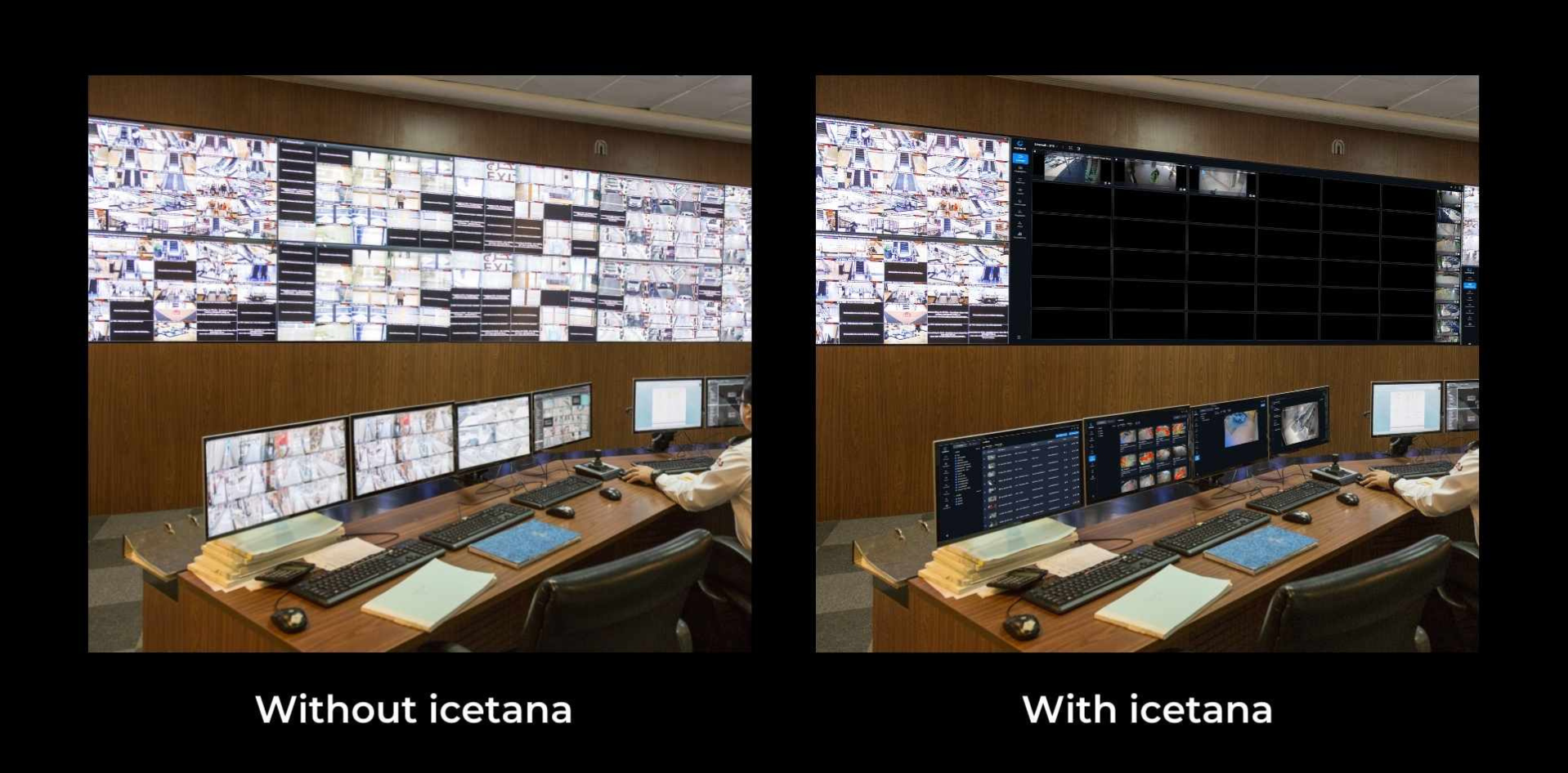
Walk into any modern control room and you’ll see the paradox immediately. Walls of screens, dozens to hundreds of live feeds, all streaming flawlessly, yet the operators in front of them can only meaningfully process a fraction of what unfolds.
The Modern Surveillance Paradox
While global CCTV deployments continue to grow exponentially in both public and private sectors, detection rates are flat or even declining. Studies carried out in recent years showed London as one of the most surveilled cities in Europe with approximately 68.4 cameras per 1,000 inhabitants, ranking it among the highest for camera density rates in Europe. Yet, it isn’t crime free, proving that camera density alone does not guarantee proportionally less crime.
Simply installing more cameras per kilometer creates an illusion of coverage. Human cognitive bandwidth does not scale with hardware volume. How can operators be expected to keep their eye and attention on so many screens/cameras at the same time for hours on end? They can’t.
The result? Cognitive overload, missed incidents, and diminishing detection returns despite ever-increasing camera density.
The result is a bottleneck of attention, adding further risks and leading to:
- The illusion of security: organisations believe they are “seeing everything,” while operators can effectively and meaningfully only follow a few screens at a time
- Missed incidents: subtle precursors and early warning signs slip through unnoticed
- Alarm fatigue: traditional rule-based analytics fire constantly, desensitizing teams to real threats
- Wasted resources: valuable time is spent responding to false alarms instead of real events
The Failure of “Rules” in a Dynamic World
Traditional video analytics are built on rigid logic: if X happens, trigger Y. But real environments are dynamic, messy, and unpredictable. A rule that works at 2:00 PM on a Tuesday may be irrelevant at 2:00 AM on a Sunday. Traditional systems fail to account for context, seasons, or novel events. They leave the heavy lifting to the human eye, which is already overloaded.
The failure to capture these events or even simple deviations from what is ordinary means that many incidents and precursors to security breaches are missed.
To solve the overload problem, security needs to take the opposite approach. We do not need systems that must be told what to look for; we need systems that learn what “normal” looks like and only alert us when reality deviates from it.
The Shift to Self-Learning AI
This is where self-learning anomaly detection transforms the operator’s reality and the standard of security.
Instead of relying on pre-defined rules, self-learning AI allows the environment to teach the system what typical patterns are, and let it highlight what doesn’t belong. It automatically filters out the 99% of footage that is routine and highlights the 1% that is unusual. Self-learning video AI fundamentally alters the flow of security operations.
Instead of forcing operators to watch everything, all the time, AI-driven solutions transform the entire workflow:
- From Passive to Proactive: Operators stop staring at static walls and start managing exceptions.
- Contextual Awareness: The system understands that a delivery truck is normal at the loading dock but abnormal at the main entrance.
- Reduced Noise: False alarms plummet, meaning when an alert triggers, operators know it matters. The control room becomes quieter, more focused, more intentional.
Operators see less, and therefore respond faster and better to anomalies.
The goal with self-learning AI is not to watch everything. It’s to only watch what’s worth watching. This reduces operator fatigue, error and missed cues, leading to laser focused intervention rather than alarm overload.
Small Deviations with Big Security Impact
Damaging events, whether in a logistics park, a metro station, or a museum, rarely begin as a single, obvious explosion of chaos. They start as sequences of micro-behaviours like a person lingering too long near a restricted door, a vehicle moving against the flow of traffic, or entry patterns that don’t match visitor norms.
None of these micro-behaviours trigger a traditional “line-cross” alert. But together, they form a clear deviation from normality.
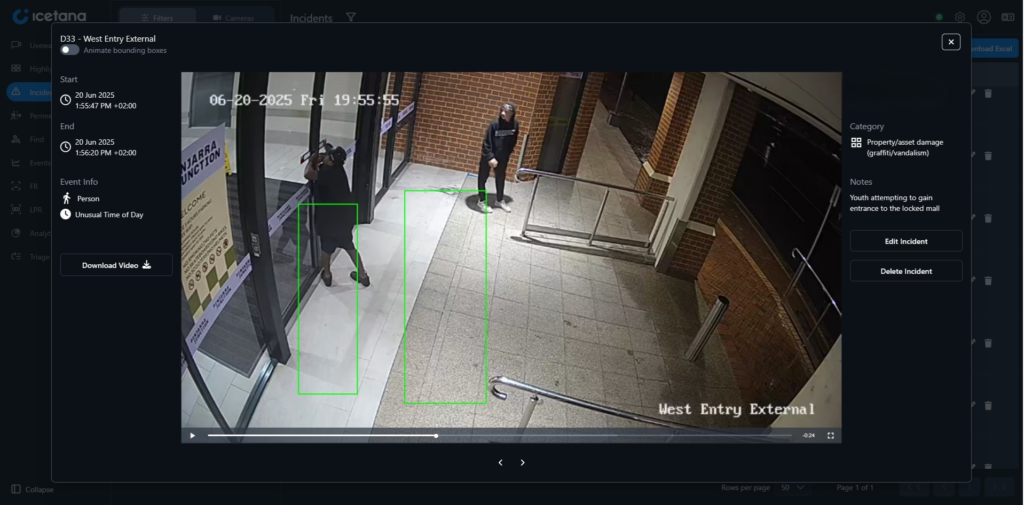
Take the recent Louvre Museum heist in Paris. The traditional security systems did not notice or flag any of the above incidents, but they all happened in the lead up to the $100 million theft. Traditional systems miss these precursors because they don’t violate a hard rule. Self-learning AI, however, flags them immediately simply because they are unusual.
Modern self-learning video systems, can monitor hundreds of streams simultaneously and highlight anomalies in real time. In a case like the Louvre, AI-powered systems could have instantly detected unusual activity like workers in non-construction areas, a truck-mounted lift approaching a restricted facade and the other out of the ordinary events that occurred, and which could have triggered alerts long before the actual theft took place.
Using AI makes extensive camera coverage more manageable, reducing workload, boosting responsiveness, and making surveillance more scalable and economically viable, especially for large, complex properties.
Security Moves from Watching Everything to Only What’s Abnormal with Macnica ATD Europe and Icetana
Security must move from watching everything to showing only what’s abnormal.
Macnica ATD Europe, a trusted technology solutions partner, is actively driving the shift towards smarter vision solutions across the European security landscape. With decades of technical expertise, deep understanding of complex vision systems, and a proven track record supporting high-demand industries, Macnica ATD Europe acts as both a technology partner and an implementation specialist.
Together with Icetana they bring self-learning anomaly-detection AI to organisations that can no longer scale their operations through human monitoring alone.
Icetana’s AI software continuously learns the normal behavioural patterns of each camera view, day by day, season by season, and alerts operators only when something truly unusual occurs. Rather than relying on motion detection or rigid rules, the system adapts to real-world environments and automatically filters out the noise.
The solution delivers measurable operational advantages:
- A single operator can effectively monitor up to 500 cameras
- A shift from “record and review afterwards” to real-time anomaly detection and alerting
- Faster detection of unusual behaviour, from loitering to rooftop access
- More efficient resource use and reduced operational cost
Crucially, Icetana integrates seamlessly with existing infrastructure, an essential requirement across Europe, where legacy estates, mixed-generation hardware and budget-conscious modernisation projects are common. This allows organisations to gain next-generation capability without replacing cameras or rewriting their entire security strategy.
What Macnica ATD Europe adds is the expertise to deploy these systems effectively, helping customers understand where AI brings the highest impact, how to integrate anomaly detection into existing workflows, and how to scale the technology across diverse sites and operational models.
Europe’s security challenge is no longer about capturing more footage or installing more cameras.
It is about extracting meaning from the overwhelming volumes of video we already generate.