

Day one of CES rarely brings surprises. What it does bring is clarity.
As the doors opened in Las Vegas, the early signals for machine vision were not found in any single product launch, but in how consistently vision is being treated across the show floor. In robotics, embedded platforms, and consumer systems alike, machine vision is no longer being introduced or justified. It is assumed.
That shift, more than any headline announcement, is the real story emerging from CES 2026 Day 1.
Vision-First Robotics Is Now the Default
One of the most striking patterns on the show floor is how little time exhibitors spend explaining why robots need vision. The assumption is already there.
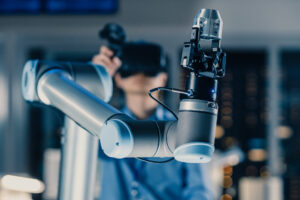
Across domestic and service robotics, including platforms presented by companies such as LG and SwitchBot, demonstrations center on spatial awareness, object interaction, and environmental understanding. Motion is no longer the headline. Perception is.
What is notable is not the presence of cameras, but the role vision plays in system design. Visual perception is positioned as the starting point around which autonomy is built, rather than a capability layered on later. Systems are shown navigating, adapting, and interacting in ways that depend on continuous interpretation of their surroundings.
The implication is clear: vision has moved upstream. It now shapes decisions before action takes place, and perception quality is increasingly the primary constraint on system intelligence.
Edge Vision Moves from Optimisation to Requirement
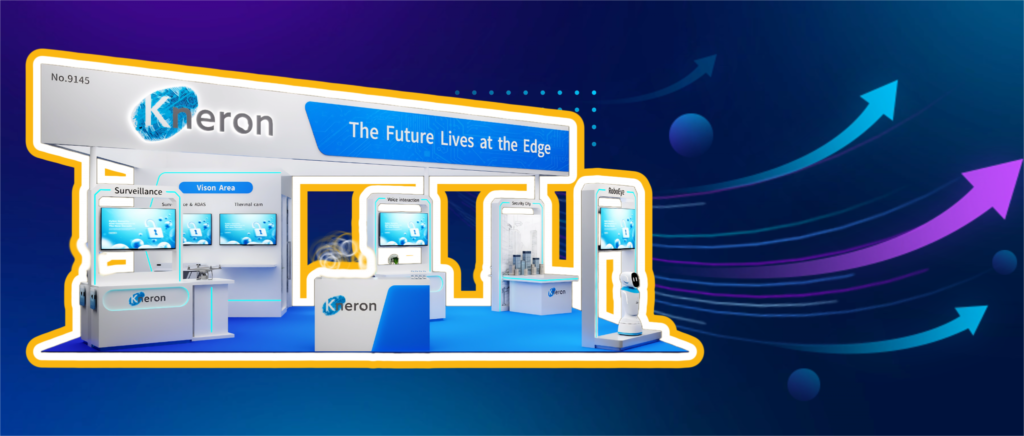
Kneron booth visualisation highlighting edge AI and vision-focused platforms. | Image credit: Courtesy of Kneron
Another theme that becomes tangible on Day 1 is the shift toward edge processing as a design necessity rather than a performance enhancement.
Across semiconductor, memory, and embedded computing exhibits, vision workloads are being pulled decisively closer to the device. Exhibitors such as Etron, alongside other embedded platform providers, are framing edge intelligence around predictability, privacy, and reliability.
Rather than emphasising raw throughput or benchmark numbers, conversations focus on deterministic behaviour and local decision-making. Vision data, in particular, is treated as something that should be processed where actions occur, especially in systems operating under safety, latency, or privacy constraints.
This framing reflects a broader industry understanding: autonomous and semi-autonomous systems cannot rely on perception that is abstracted away from the point of control. Seeing must happen where decisions are made.
Consumer Systems Are Exposing the Hardest Vision Problems
CES 2026 Day 1 also reinforces how consumer-facing devices are becoming some of the most demanding test environments for machine vision.
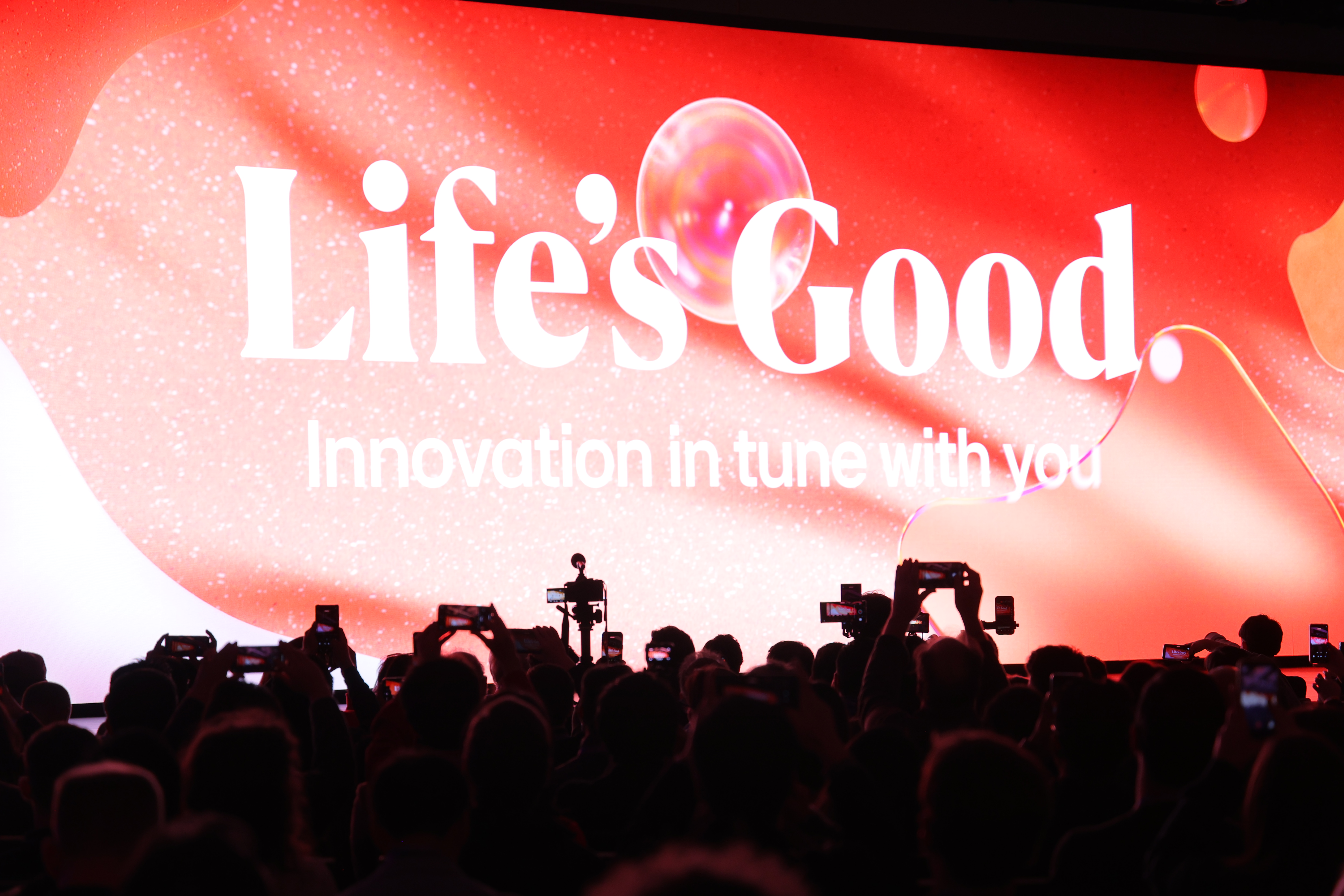
Vision-enabled systems shown by major electronics brands such as Samsung and LG are expected to function reliably in homes and public spaces defined by variability. Lighting changes constantly. Scenes are cluttered. Human behaviour is unpredictable.
These conditions closely mirror, and often exceed, the challenges faced in industrial inspection, logistics, and automation. What appears as consumer technology is, in practice, a large-scale stress test for perception systems.
The takeaway for machine vision professionals is straightforward: the problems being solved in domestic and consumer environments today will increasingly shape expectations for robustness and adaptability in industrial systems tomorrow.
Less Focus on Specs, More on System Behaviour
Another subtle but important pattern emerging from the show floor is a reduced emphasis on traditional specification-driven messaging.
Resolution, frame rate, and compute performance are still present, but they are rarely the headline. Instead, exhibitors are talking about how systems behave in the real world: how they respond to uncertainty, recover from errors, and interact safely with people and environments.
This shift suggests a maturing market. Machine vision is no longer evaluated primarily on isolated technical benchmarks, but on how effectively it supports reliable system-level behaviour over time.
What Stood Out on Day 1
Across halls and categories, a few consistent observations stand out:
- Vision is rarely introduced as a standalone capability
- Perception is assumed as part of broader system narratives
- Edge processing is framed around trust and predictability, not speed alone
- Exhibitors spend more time discussing behaviour and outcomes than components
Taken together, these signals point to an industry that has moved beyond proving that machines can see, and is now focused on what seeing enables in real-world systems.
Early Takeaway
CES 2026 Day 1 does not overturn expectations. It validates them.
Machine vision is being treated as infrastructure, not innovation. Edge processing is positioned as a prerequisite for trust and autonomy. Consumer environments are exerting real pressure on perception robustness. And value is increasingly discussed in terms of system behaviour rather than component performance.
The coming days will reveal which of these narratives are backed by deployable systems and which remain aspirational. But after Day 1, the direction of travel is already visible.
MVPro Media will continue to track how these early CES signals translate into real-world machine vision deployments as the week progresses.